





What to expect for tree removal
Mastering Tree Removal - What to Expect
Tree removal is a substantial project that requires planning, safety measures, and the right equipment. This article explains the main steps, typical safety protocols, common tools, and what to expect for costs and permits so you can make informed decisions when hiring professionals.
What Are the Essential Steps in the Tree Removal Process?
The removal process follows a clear sequence to protect people and property.
Assessment: Evaluate the tree's health, condition, and surroundings.
Estimation: Provide an itemized cost and time estimate.
Scheduling: Book a date that suits the client and crew availability.
Execution: Carry out removal with trained staff and proper rigging.
Cleanup: Remove debris and, if requested, grind the stump.
Fuerte Tree Service, a Bakersfield tree care company, offers removal, trimming, and stump grinding for residential and commercial clients, ensuring professional handling from assessment to cleanup.
How Do Professionals Assess and Plan Tree Removal?
Arborists assess tree health, structural risks, and site access. Visual inspection and basic diagnostics determine if removal is necessary and which techniques and equipment to use. Cost estimates reflect tree size, proximity to structures, and accessibility, while scheduling coordinates crew, equipment, and safety measures.
What Safety Measures Are Taken During Tree Removal?

Safety is the priority. Teams prepare the site, use protective gear, and control the work area to reduce risk to people and property.
Use of Safety Gear: PPE such as helmets, gloves, eye protection, and harnesses.
Site Preparation: Clear work zones and identify hazards (power lines, structures).
Traffic and Bystander Control: Barriers or signage to keep people clear of the zone.
Emergency Protocols: Plans and communications for unexpected incidents.
These measures minimize accidents and help the job proceed efficiently.
How Is Tree Removal Performed Safely Using Specialized Equipment?
Removing a tree safely often requires chainsaws, lifts, rigging, and stump grinders. Each tool has a specific role and trained operators to reduce risk.
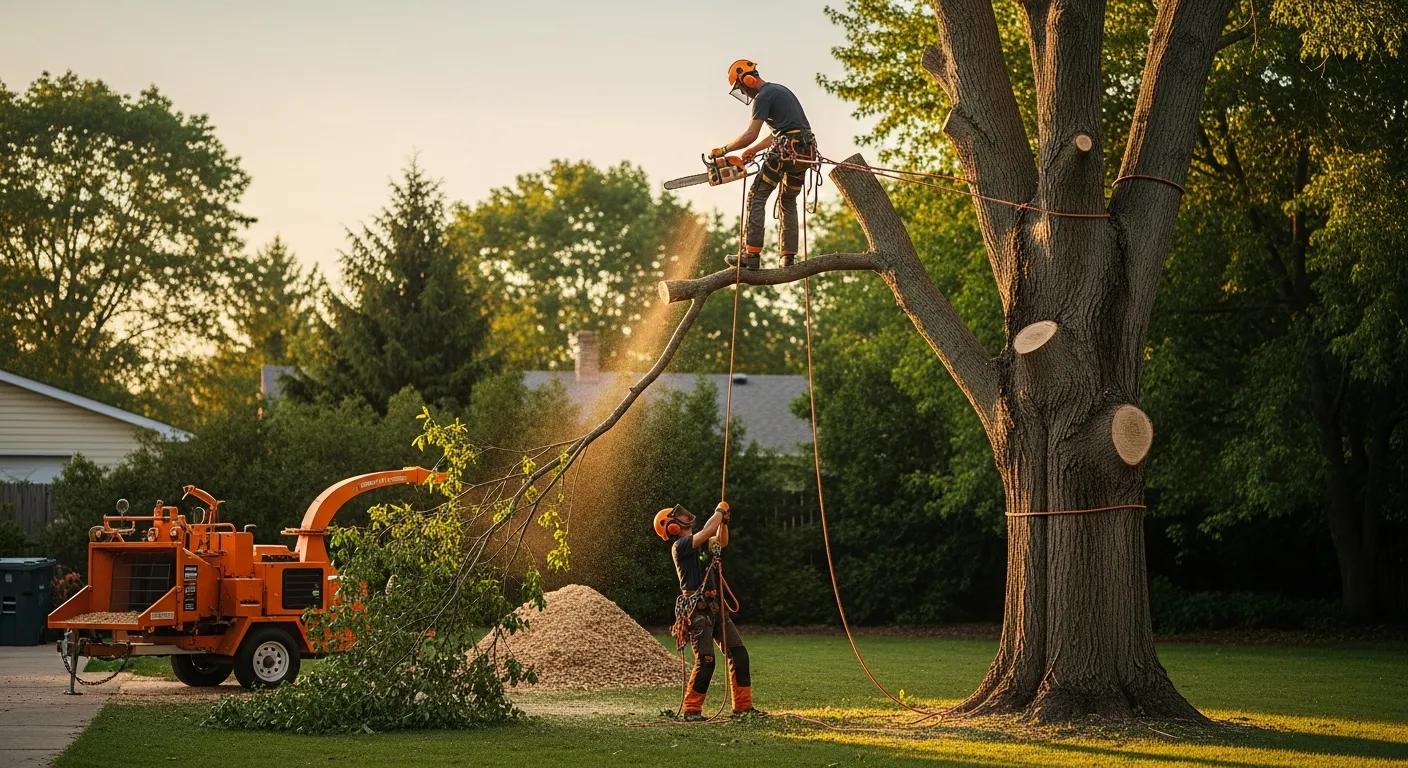
Professionals combine equipment and techniques to access crowns, make precise cuts, and control descent of branches and trunk sections.
What Equipment Is Commonly Used in Tree Removal?

Common equipment:
Chainsaws: For cutting trunks and limbs.
Cranes or Bucket Trucks: Reach high or confined areas and lift heavy sections.
Ropes and Rigging: Control fall direction and lower large pieces safely.
Stump Grinders: Grind stumps below grade for replanting or landscaping.
Using the right tools reduces time on site and lowers the chance of property damage.
How Do Experts Use Chainsaws and Cranes for Efficient Tree Cutting?
Teams coordinate climbing or aerial access with ground crews. Chainsaws make precise sectional cuts while cranes or bucket trucks support and lower large pieces. Rigging systems steer falls away from structures. This staged, controlled approach protects workers and nearby assets.
For those interested in technical comparisons of methods and productivity, specialized studies examine productivity and costs for urban felling.
Urban Tree Felling: Methods, Productivity & Costs To remove trees, operators dismantle the plant utilizing either an aerial lift or ascending the crown with ropes, the so-called “tree-climbing”. The study aimed at: (1) investigating technical and economic features of felling; (2) evaluating the productivity, the costs and the sustainability of the observed yards. Work Time Study, Productivity and Costs of Felling Trees in Urban Areas, M Biocca, 2022
What Costs and Permits Should You Expect for Tree Removal Services?
Costs vary by tree size, species, location, and access. In Bakersfield, typical removal fees range roughly from $400 to $1,500, while some smaller palms may cost $300–$1,200 depending on access and size.
An economic model can help compare ongoing treatment costs versus a one-time removal and replacement expense when deciding how to proceed with a problematic tree.
Homeowner Tree Removal Costs: Treat vs. Remove Model A model is presented to assist in deciding the fate of ash trees (Fraxinusspp.) threatened by the arrival of emerald ash borer (Agrilus planipennisFairmaire) in North America. The model tracks ongoing treatment costs versus one-time costs associated with removal and replacement. All future values are discounted following standard economic practice. For each year over a period of interest, the net treatment gain/loss is calculated, indicating the period of time over which a homeowner would be financially ahead/behind by treating the existing ash tree. To treat or remove: an economic model to assist in deciding the fate of ash trees threatened by emerald ash borer, JH Pedlar, 2012
How Is a Tree Removal Cost Estimate Calculated?
Estimates reflect three main factors:
Size and Type of Tree: Larger or hazardous trees cost more.
Location and Accessibility: Tight spaces or proximity to structures raise costs.
Health of the Tree: Diseased or unstable trees may require extra precautions.
These elements help pros give a realistic price and plan the job safely.
Do You Need a Permit for Tree Removal in Bakersfield?
Permits are often required for trees on public property or protected species; local ordinances can also apply to private property within city limits.
Local Regulations: Check the City of Bakersfield’s Planning Department or local authority.
Permit Application Process: Submit tree details (location, species, reasons) as part of the application.
Consequences: Removing without required permits can lead to fines or enforcement actions.
Confirm rules before scheduling work to avoid delays or penalties.
What Happens After Tree Removal: Stump Grinding and Post-Removal Care?
After removal, stump grinding and basic site care restore the area for reuse. Grinding reduces the stump to mulch and clears the ground for landscaping.
Stump grinding removes most of the visible stump below grade; time on site depends on stump diameter, root depth, and equipment.
How Is the Stump Removal Process Conducted?
Operators use a stump grinder to turn the stump into mulch, working below ground level to remove the main root collar. Depending on size, grinding can take from a couple of hours to most of a day.
What Are the Recommended Post-Removal Care Steps?
Recommended follow-up:
Monitoring: Watch for regrowth or pests.
Future Tree Planting: Plan and amend soil before replanting.
Soil Care: Add topsoil or compost as needed for new plantings.
These steps help the site recover and prepare it for new landscaping.
Frequently Asked Questions
What are the signs that a tree needs to be removed?
Signs include visible decay, large cracks or cavities, significant lean, dead branches, severe pest or disease problems, or obstruction of utilities. An arborist can confirm risks and recommend removal or alternatives.
How long does the tree removal process typically take?
Small to medium trees often take a few hours; large or complex removals can take a full day or more. Stump grinding and cleanup may add additional time.
Can I remove a tree myself, or should I hire a professional?
Removing a tree can be hazardous. Hiring trained professionals reduces injury and property-damage risk and ensures proper equipment and permits are used.
What should I do with the wood after a tree is removed?
Options include keeping the wood for firewood, having it chipped into mulch for landscaping, or having the removal service haul it away—discuss your preference with the crew beforehand.
Are there any environmental considerations when removing a tree?
Yes. Trees provide habitat, shade, and air-quality benefits. Consider treatment, pruning, or replacement planting where feasible, and check for protected-species rules before removal.
What are the benefits of stump grinding after tree removal?
Stump grinding removes an eyesore and trip hazard, prevents some pest issues, and produces mulch that can be reused. It also clears the area for new plantings or construction.
